Imagine it’s a freezing January morning in Everett, and you’re already running late. You hit the button, but instead of the smooth motion you expect, your garage door lets out a grinding screech that wakes the neighbors or simply refuses to move at all. It’s a common frustration for many homeowners, and quite often, these disruptions are the first clear signs you need a new garage door opener rather than just another temporary fix. You deserve a home that functions reliably, and an unpredictable motor is a source of anxiety you don’t need.
Deciding whether to invest in a repair or a full replacement can often feel like a gamble. This 2026 guide is designed to remove that guesswork by providing a clear diagnostic checklist for your system. You’ll learn how to identify critical mechanical warnings, understand the safety benefits of modern smart technology, and determine when a repair is no longer a cost-effective choice. We’ll walk through everything from disruptive noise levels to the latest safety standards, giving you the confidence to choose a quiet, dependable solution that protects your family and your property.
Key Takeaways
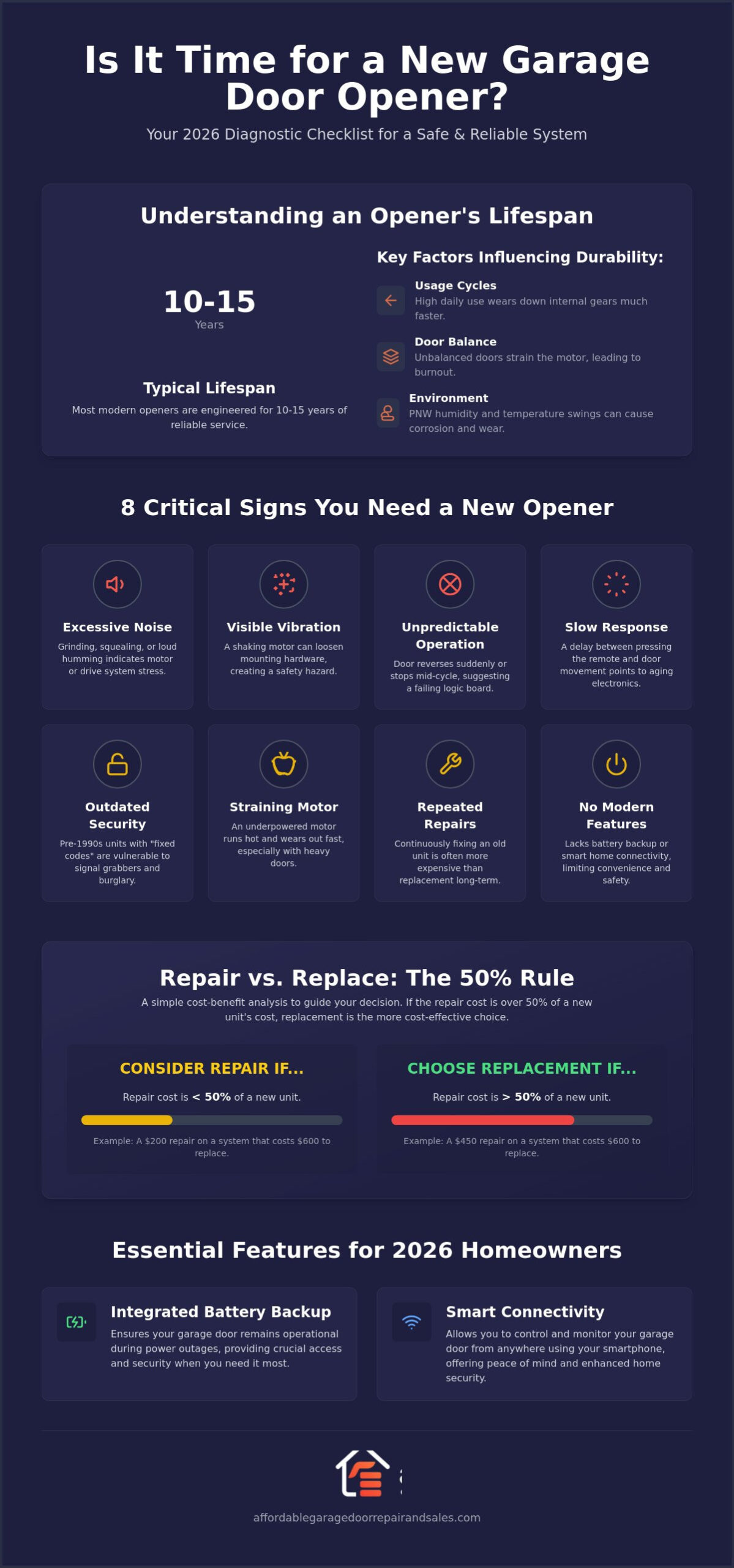
- Understand the typical 10–15 year lifespan of modern units and how daily usage cycles impact the durability of internal gears.
- Recognize the physical signs you need a new garage door opener, from excessive vibration to intermittent response times that can leave your home vulnerable.
- Follow a professional 5-step performance test to determine if your issues stem from the opener motor or a simple door balance problem.
- Apply the “50% Rule” to make a cost-effective decision between paying for repeated repairs or upgrading to a more efficient system.
- Explore the essential features for 2026 homeowners, including integrated battery backups for power outages and smart connectivity for remote access.
Understanding the Lifespan of a Modern Garage Door Opener
Most modern garage door openers are engineered to provide reliable service for 10 to 15 years. However, the manufacture date stamped on the motor housing doesn’t always tell the full story of its remaining life. An opener’s “true” age is more accurately measured in cycles. One cycle consists of the door opening and closing completely. If your household uses the garage as a primary entrance, cycling the door four or five times every day, the internal gears will experience significantly more wear than a unit in a home where the garage is only used for weekend storage. Understanding the history of the garage door opener reveals how these systems have evolved from simple mechanical winches to complex motorized units that require precise calibration to stay functional.
In Washington, our specific environment plays a major role in how quickly these systems degrade. The high humidity levels common in Everett and Seattle can lead to premature corrosion on internal metal components and electrical contacts. Conversely, the sharp temperature swings in Spokane can cause motor insulation to become brittle or affect the sensitivity of the safety sensors. When these environmental stressors combine with high daily usage, they often produce the first signs you need a new garage door opener, such as a motor that hums without moving or a door that hesitates mid-travel. If you want a deeper look at exactly how long garage door openers last and which Washington-specific factors accelerate wear, our 2026 lifespan guide breaks down the full picture.
Mechanical balance is another critical factor. The opener is designed to guide the door, while the springs do the actual heavy lifting. If your door is unbalanced or the springs have lost their tension, the motor must work significantly harder to move the dead weight. This extra strain leads to gear stripping and motor burnout. Monitoring these performance shifts is essential to prevent a total system failure at an inconvenient time.
Chain Drive vs. Belt Drive Longevity
Chain drives are known for their durability and are often the most affordable choice. However, their metal-on-metal design makes them prone to rust in our damp Pacific Northwest climate. Belt drives offer a quieter operation and are generally more resistant to environmental corrosion. While both systems have similar lifespans, belt drives often require less frequent tension adjustments. Consistent maintenance, such as lubricating the rail and checking the drive tension, can extend the life of either system by three to five years.
The Role of Horsepower (HP) in System Fatigue
Horsepower determines the motor’s lifting capacity. Many older installations used 1/2 HP motors that struggle with heavy insulated steel or solid wood doors. An underpowered motor runs hotter and wears out its internal components much faster than a correctly sized unit. If you hear the motor straining or notice the door moving slower than it did in previous years, these are clear signs you need a new garage door opener with a higher HP rating. Upgrading to a 3/4 HP or 1 HP motor ensures the system has the torque necessary for smooth, long-term operation.
8 Critical Signs You Need a New Garage Door Opener
Identifying a failing opener often begins with your ears. New sounds like grinding, squealing, or loud humming usually indicate that the motor or drive system is under excessive stress. If your door begins to reverse for no apparent reason or stops halfway through a cycle, these are among the most urgent signs you need a new garage door opener. These intermittent glitches aren’t just annoying; they suggest the logic board is failing or the motor’s force settings are no longer accurate. When a system becomes unpredictable, it ceases to be a convenience and starts becoming a liability.
Vibration is another red flag that homeowners often overlook. A motor that shakes or vibrates visibly during the opening cycle will eventually loosen the mounting hardware, creating a safety hazard for anyone standing nearby. You might also notice a significant delay between pressing your remote and the door actually moving. While a simple battery change might fix a remote, a consistent lag in response usually points to an aging receiver or a motor capacitor that’s struggling to engage. If you find yourself clicking the button multiple times to get a reaction, the internal electronics are likely reaching their limit.
Safety and Security Red Flags
Security risks are often less visible than mechanical ones but are equally critical. Older openers manufactured before the mid-1990s frequently use “fixed code” technology. This allows burglars with basic signal grabbers to intercept your code and gain entry to your home. Modern systems utilize rolling codes that change every time the door is operated. Additionally, if your safety sensors are consistently failing to detect obstructions or won’t stay aligned despite your best efforts, your unit may no longer meet current federal safety standards. We also see “phantom openings” where the door opens on its own, often caused by short circuits or frequency interference from a neighbor’s device.
Mechanical and Electrical Failure Points
Internal failure can manifest as a burnt electrical smell or smoke coming from the motor casing. This indicates a serious wiring issue or a seized motor that poses a fire risk. If you hear the motor running but the chain or belt remains stationary, the internal drive gears are likely stripped and can no longer transfer power. In regions like Spokane, frequent power surges during winter storms can fry delicate circuit boards, leading to total system failure. If you’re experiencing these issues, a professional safety inspection can help determine if a replacement is the most secure path forward for your home.
How to Diagnose Your Opener: A 5-Step Performance Test
Before you decide to replace your system, it’s vital to isolate whether the issue lies within the motor or the door itself. Start with the garage door in the fully closed position to ensure safety. Pull the red emergency release cord to disconnect the opener from the door. Lift the door manually to about waist height and let go. A well balanced door should stay in place. If it crashes to the floor or feels incredibly heavy, your springs are likely the problem. However, if the door moves smoothly by hand but the motor still grinds or hesitates when reconnected, you’ve found one of the primary signs you need a new garage door opener.
The next phase involves testing the internal safety logic. Place a 2×4 wood block flat on the ground in the center of the door’s path and activate the close cycle. Upon contact with the wood, the door must reverse immediately. If it continues to push or stalls without reversing, the internal safety sensors or the logic board are failing. This is a critical safety risk that often necessitates a full system upgrade. You should also check the force settings by applying light upward resistance as the door closes. A motor that doesn’t pause under this pressure is no longer operating within safe parameters.
Finally, inspect the photo-eye sensors located near the floor on either side of the door. Clean the lenses with a soft cloth and ensure they are perfectly aligned. If the indicator lights flicker or remain dark despite being pointed at each other, the wiring or the sensors themselves are likely degraded. In the damp climates of Seattle or Everett, these components often corrode, leading to inconsistent operation that a simple cleaning won’t fix.
Troubleshooting Remote and Keypad Issues
Sometimes the problem is purely digital rather than mechanical. If your remotes aren’t working, start by replacing the batteries and checking for signal interference. We frequently assist homeowners who need to learn how to program liftmaster garage door opener remotes after a local power surge clears the memory. If the motor responds to the wall button but ignores the remote even after reprogramming, the internal receiver has likely failed. Similarly, if you find your garage door keypad not working despite entering the correct code, the issue may stem from battery corrosion, an accidental lockout mode, or signal interference — problems that are often fixable before concluding the opener itself needs replacement. You can also try adjusting the limit switches if the door doesn’t close flush with the floor, but if the door “drifts” after setting these limits, the internal gears are likely worn out.
When Troubleshooting Fails: Identifying ‘Unfixable’ Issues
There are certain red flags that signal the end of an opener’s service life. Cracked motor housings are a major structural concern and cannot be safely patched or glued. If your unit is more than 20 years old, you’ll likely find that the manufacturer no longer supports it with replacement parts. Bypassing internal sensors to keep an old motor running is never a solution; it creates a severe liability and safety hazard for your family. When these core components fail on an obsolete model, a modern replacement is the only dependable path forward.
Repairing vs. Replacing: Making the Cost-Effective Choice
When a motor starts to fail, the first question is usually about the budget. We recommend following the “50% Rule” as a reliable guide for your decision. If the quote for a single repair exceeds half the cost of a brand-new system, it’s time to stop patching the old one. This logic holds up especially well when you’ve noticed multiple signs you need a new garage door opener over the last year. Frequent service calls for small issues like sensor misalignment or internal gear wear quickly add up to more than the price of a modern, reliable unit.
Efficiency is another hidden factor that impacts your long-term costs. Older motors use AC power and can be significant energy drains even when they aren’t running. Modern DC motors operate much more efficiently and offer smoother, quieter starts and stops. Beyond the monthly utility savings, a new system improves your home’s resale value and curb appeal. Potential buyers in 2026 look for updated, quiet systems that offer peace of mind rather than a mechanical project they’ll have to fix immediately after moving in.
It’s also essential to evaluate the condition of your springs and cables alongside the opener. The motor doesn’t work in a vacuum; it relies on the entire door assembly to function. If your hardware is reaching the end of its lifecycle, replacing the motor while the rest of the system is failing is a temporary fix at best. Taking a comprehensive approach to your garage door health ensures that your new investment isn’t prematurely damaged by an unbalanced or heavy door.
Comparing Repair Costs and New Installation
Repairing a single component like a logic board or a gear kit can seem like a budget-friendly move. However, these parts often carry short-term 90-day warranties and don’t address the underlying wear on the rest of the motor. A new opener provides a fresh 10-year warranty on the motor and ensures all internal components are synchronized. For those evaluating a total home update, our guide on New Garage Door Installation in Washington: The 2026 Homeowner’s Buying Guide explains how matching a new motor with a modern door maximizes long-term value.
Safety Standards: Pre-1993 vs. Modern Units
We maintain a strict policy against repairing units manufactured before 1993. These models lack the essential safety mechanisms that protect families from accidental injury. The UL 325 standard is a safety regulation that requires all residential garage door openers to include an external entrapment protection device, such as infrared sensors, to prevent the door from closing on people or objects. Using a non-compliant system can lead to legal liabilities and insurance denials. If you suspect your unit is outdated, you can request a safety inspection to ensure your garage meets current Washington building codes and safety requirements.
Upgrading to a Modern Smart Opener in Washington
Upgrading to a modern system is the logical next step once you’ve confirmed the signs you need a new garage door opener in your own home. For Seattle commuters, Wi-Fi connectivity offers a level of control that older units simply can’t match. You can receive real-time smartphone alerts if the door is left open or operate the system remotely to let in a trusted service provider while you’re at the office. This technology transforms the garage from a simple storage space into a secure, monitored entry point that fits into your digital life.
In Washington, weather resilience is a major factor in hardware selection. Our wind-storm-prone regions frequently experience power outages that can leave traditional openers useless. Modern units often include an integrated battery backup, ensuring you aren’t trapped inside or locked out during a storm. Additionally, integrated LED lighting systems are a significant upgrade for those dark, icy winter mornings in Spokane. These high-output lights illuminate the entire garage and driveway area, providing extra safety and visibility when you need it most. If your current motor is loud enough to wake the household, switching to an ultra-quiet DC motor will provide immediate relief for your family and your neighbors.
Recognizing the signs you need a new garage door opener is about more than just fixing a noise; it’s an opportunity to improve your home’s overall security profile. Modern DC motors use soft start and stop technology, which reduces the physical jarring on your door’s tracks and rollers, potentially extending the life of your entire door system.
Smart Home Integration and Security
Modern security features go far beyond simple remote controls. You can now sync your opener with Amazon Key for secure, in-garage package deliveries that keep your orders safe from porch pirates. Many new models also feature built-in cameras, allowing you to monitor your home’s most frequent entry point through a live video feed. To protect against tech-savvy thieves, these systems utilize rolling code technology, which generates a unique signal every time the door is activated, making “code grabbing” virtually impossible.
Professional Installation: The Affordable Garage Door Difference
Choosing a high-quality motor is only half the battle. Professional installation ensures the system is calibrated perfectly to your door’s specific weight and balance. This precision prevents future damage to your springs and cables that often occurs with DIY setups. We provide 24/7 emergency support across Everett, Yakima, and the surrounding areas to ensure your home remains accessible at all times. Schedule your free on-site estimate for a new opener today to see how a modern upgrade can improve your home’s safety and convenience.
Secure Your Home with a Reliable Modern Opener
Your garage door opener is the primary gateway to your home. Recognizing the signs you need a new garage door opener early prevents minor mechanical glitches from turning into major security vulnerabilities. By staying aware of the typical 10 to 15 year lifespan and performing regular safety reversal tests, you can stay ahead of unexpected system failures. Moving toward a modern, smart system is an investment in your property’s value and your family’s daily convenience.
We specialize in providing peace of mind through professional calibration and high-quality hardware. Our expert LiftMaster and Genie technicians are available for 24/7 emergency service across Seattle, Spokane, and Everett. We provide free on-site safety inspections to ensure every component of your door is operating within safe parameters. If you’re ready to upgrade your home’s accessibility, Get a Free Estimate on a New, Smart Garage Door Opener today. You deserve a system that works every time you hit the button.
Frequently Asked Questions
How much does a new garage door opener cost to install in Washington?
The total cost for a new installation depends on several factors, including the motor’s horsepower, the drive type, and any integrated smart features. A heavy wood door in Seattle might require a more powerful 3/4 HP motor, while a standard aluminum door in Spokane could function well with a more basic unit. Professional estimates are the most reliable way to determine the specific requirements for your garage’s configuration and local building codes.
Can I replace my garage door opener myself?
While some homeowners attempt a DIY installation, it requires specialized tools and a deep understanding of mechanical calibration. An incorrectly installed motor can put undue stress on your door’s tracks and springs, leading to expensive repairs later. Professional technicians ensure that the safety sensors are perfectly aligned and that the motor’s force settings comply with current safety standards, which also keeps your manufacturer’s warranty valid.
Why is my garage door opener making a loud grinding noise?
A loud grinding sound usually indicates that the internal drive gears are stripped or that the motor is failing. This often happens when the plastic gears inside the housing wear down after years of use. If your unit is more than a decade old and starts making these sounds, it’s one of the primary signs you need a new garage door opener. Continuing to use a grinding motor can lead to a total system seizure at an inconvenient time.
How do I know if my garage door springs are the real problem?
You can identify spring issues by performing a manual balance test. Disconnect the opener by pulling the red emergency release cord and try to lift the door by hand. If the door feels incredibly heavy or won’t stay open halfway, your springs are likely broken or out of tension. If the door is light and stays in place but the motor still won’t move it, the problem lies within the opener itself.
Do new garage door openers come with a battery backup?
Many modern models include a battery backup, but it’s not a standard feature on every entry-level unit. In Washington, we highly recommend choosing a model with this capability to ensure your garage remains accessible during winter wind storms and power outages. Most high-end smart openers now include an integrated battery that can provide several full cycles of operation without main power.
What is the quietest garage door opener for a bedroom-adjacent garage?
Belt-drive openers equipped with DC motors are the quietest option for homes with living spaces above or next to the garage. Unlike chain drives that use metal-on-metal contact, belt drives use a rubber-reinforced belt that significantly dampens vibration. DC motors also offer “soft start and stop” technology, which prevents the loud thumping sound that occurs when a door begins to move or reaches the floor.
Can I add a smart Wi-Fi controller to my existing old opener?
Smart controllers can be retrofitted to most garage door openers manufactured after 1993. These hubs allow you to monitor and operate the door from your smartphone. However, if your current system is already showing signs you need a new garage door opener, such as intermittent operation or slow response times, it’s more cost-effective to invest in a new unit with built-in Wi-Fi rather than adding accessories to a failing motor.
What should I do if my garage door opener remote stops working?
Start by replacing the batteries and checking if the “lock” button on your wall console was accidentally engaged. If new batteries and a reset don’t fix the issue, the internal receiver on the logic board may have failed. In older models, signal interference from newer LED bulbs or nearby electronic devices can also cause remotes to stop working. If the motor responds to the wall button but ignores a fresh remote, the electronics are likely reaching the end of their service life. For a comprehensive overview of how long garage door openers last and when replacement makes sense, our 2026 guide can help you determine whether a new remote or an entirely new system is the right investment.