Is a custom wood garage door a liability in a state where it rains nearly 150 days a year? Most homeowners in Washington love the look of natural timber but worry that the Pacific Northwest’s relentless moisture will turn their investment into a warped, rotting mess within a few seasons. It’s a valid concern, especially when you consider the weight of premium wood and the strain it puts on standard hardware.
This guide shows you how a professional custom wood garage door installation can actually thrive in our unique climate when engineered with the right species and heavy-duty components. You’ll discover the best moisture-resistant woods like Western Red Cedar, the technical requirements of the 2021 Washington State Residential Code, and why high-weight torsion springs are essential for long-term performance. By the end, you’ll know how to achieve a stunning, one-of-a-kind entryway that increases your property value without the typical maintenance headaches.
Key Takeaways
- Learn how handcrafted wood doors serve as a high-value investment that transforms your home’s exterior and neighborhood standing beyond standard steel options.
- Discover why Western Red Cedar and Mahogany are the gold standards for resisting moisture and decay in the Pacific Northwest’s damp climate.
- Understand the critical hardware requirements for custom wood garage door installation, including high-cycle torsion springs designed to handle premium door weights.
- Master the “six-side” sealing rule to protect every surface of your door from Washington’s humidity and identify early signs of finish wear.
- Find out how to streamline your project with a free on-site estimate and professional installation that complies with the latest Washington State building codes.
Why Custom Wood Garage Doors Are the Ultimate Curb Appeal Investment
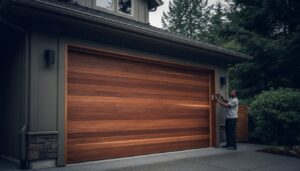
Choosing a custom wood garage door installation represents a shift from standard utility to architectural design. While most residential garage doors are made of wood, metal, or fiberglass, a true custom build avoids the “cookie-cutter” look of mass-produced steel. These doors are handcrafted from the ground up, utilizing solid timber frames rather than thin veneers glued to metal. This approach allows for a level of precision and detail that defines a luxury property.
The choice of natural materials impacts more than just looks: wood acts as a natural thermal barrier, providing insulation properties that basic, non-insulated steel doors can’t match. This helps stabilize garage temperatures during Washington’s damp winters and humid summers. Beyond the mechanical benefits, natural wood creates a sense of permanence and quality that resonates throughout a neighborhood, signaling a well-maintained and premium home. Whether you’re aiming for a rustic carriage house look or a sleek modern flush style, wood provides a versatility that synthetic materials fail to mirror.
The Aesthetic Advantage: Cedar, Mahogany, and Redwood
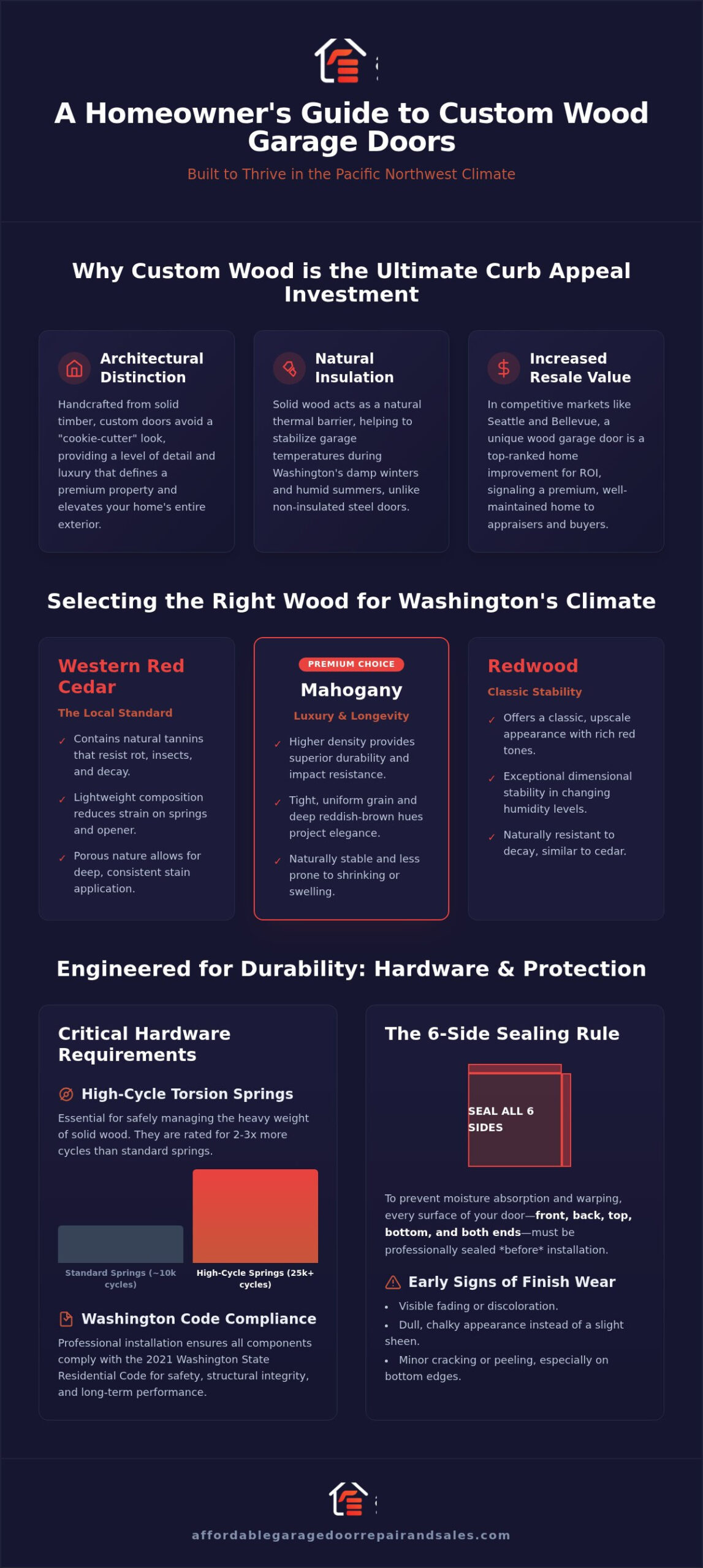
Premium wood species offer a visual depth that synthetic materials struggle to replicate. Each species brings a unique functional and aesthetic profile to your home:
- Western Red Cedar: A regional staple prized for varied grain patterns and natural resistance to decay.
- Mahogany: Known for its tight grain and deep reddish-brown hues that project luxury.
- Redwood: Offers a classic, upscale appearance with exceptional stability in changing humidity.
Matching your garage door to existing entry doors or cedar siding creates a cohesive exterior that feels intentional. Real wood provides a tactile richness; the texture and weight of the material are immediately apparent, offering a sensory experience that faux-wood steel simply cannot provide.
Increasing Your Washington Home’s Resale Value
In competitive real estate markets like Seattle, Bellevue, and Kirkland, first impressions are everything. Replacing a dated garage door remains a top-ranked home improvement project for return on investment in 2026. Premium buyers often look for unique finishes that distinguish a house from its neighbors. A custom wood installation provides a high return on investment by instantly elevating a home’s perceived market value through architectural distinction. By choosing a design that aligns with your home’s specific style, whether that’s a rustic carriage house or a sleek, modern flush panel, you ensure your property stands out to high-end appraisers and buyers alike.
Selecting the Right Wood Species for the Washington Climate
Washington’s climate presents a unique set of challenges for natural timber. With annual rainfall exceeding 37 inches in areas like Seattle and Everett, moisture is the primary factor that determines the lifespan of your door. A successful custom wood garage door installation relies on selecting species that naturally resist rot and decay. Beyond the species itself, we prioritize kiln-dried lumber. This process involves heating the wood in a controlled environment to reduce its internal moisture content to a stable level. This step is essential because it prevents the door from bowing, warping, or shrinking once it’s exposed to the Pacific Northwest’s shifting humidity levels.
For homeowners seeking a balance between sustainability and performance, reclaimed wood and certified sustainable timber are excellent choices. Reclaimed Douglas Fir or Hemlock provides a weathered, historical character that new wood cannot replicate. These materials are often sourced from old structures where the wood has already undergone decades of natural seasoning, making it exceptionally stable for our local environment.
Western Red Cedar: The Local Standard
Western Red Cedar remains the most popular choice for Washington homes. It contains natural tannins that act as a built-in preservative, protecting the wood against insects and fungal decay in damp environments. Cedar is also remarkably lightweight compared to hardwoods. This characteristic is a major advantage for your mechanical system, as it reduces the workload on your torsion springs and opener. Cedar’s porous nature allows it to take stains and clear coats deeply. Whether you want a transparent finish to showcase the natural grain or a rich dark stain, cedar provides a consistent, high-quality canvas.
Mahogany and Exotic Hardwoods for Longevity
Hardwoods like Mahogany offer a density advantage that softer woods lack. This density makes the door highly resistant to surface damage, such as dents from basketballs or accidental impacts. Mahogany is prized for its tight, consistent grain and deep reddish-brown tones that project an immediate sense of luxury. However, these dense species come with maintenance trade-offs. They’re significantly heavier than cedar, requiring heavy-duty hardware and precision balancing during the installation process.
To ensure the longevity of these premium materials, we follow industry best practices for moisture protection. You can find detailed technical guidelines regarding Long-Term Care: Protecting Your Wood Door from PNW Moisture through the Door & Access Systems Manufacturers Association. If you’re ready to see how these different wood species look against your home’s siding, our team provides a free on-site estimate to help you make an informed decision based on your home’s specific sun and rain exposure.
Engineering Your Installation: Weight, Springs, and Opener Requirements
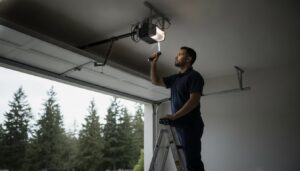
A custom wood garage door installation isn’t just a design choice; it’s a significant mechanical undertaking. A standard steel garage door typically weighs around 150 pounds. In contrast, a custom wood build can easily reach 300 to 500 pounds, depending on the thickness of the panels and the wood species chosen. This weight difference requires a complete re-engineering of the door’s support system. Standard tracks and rollers designed for lightweight doors will bend or fail under the constant stress of heavy timber. We use heavy-duty, 2-inch or 3-inch tracks and reinforced steel rollers to ensure the door remains securely in its path during every cycle.
Calibrating the balance is the most critical step in the process. A properly balanced door should feel light enough to lift by hand, even if it weighs hundreds of pounds. This balance is achieved through the precise tension of the torsion spring system. If the calibration is off, the door can slam down with dangerous force or strain the opener until the motor burns out. Integrating safety sensors and heavy-duty tracks provides the necessary foundation for long-term reliability.
Torsion Spring Upgrades for Heavy Doors
The physics of lifting a heavy door depends entirely on the torsion springs. These springs act as the counterbalance, storing energy as the door closes and releasing it to assist the lift. Standard springs are often rated for 10,000 cycles, but they’re rarely sized for the immense weight of solid cedar or mahogany. We install high-cycle, heavy-duty torsion springs specifically matched to the door’s exact weight. Using undersized springs is a major safety risk. For more information on why these components are so critical to your home’s safety, you can read about broken garage door spring repair and the risks of mechanical failure.
Choosing a Compatible Garage Door Opener
A heavy door requires a powerful motor. While a 1/2 HP motor might suffice for a basic steel door, custom wood builds generally require a 3/4 HP or 1 HP motor to handle the initial lift. Belt-drive openers are a popular choice for residential homes because they offer quiet operation and high tensile strength. For homes with living space above the garage, a wall-mount (Jackshaft) opener is often the best solution. These units attach directly to the torsion bar, eliminating the need for a ceiling-mounted rail and providing a cleaner look for custom interiors. If you’re considering a technology upgrade, our guide on garage door opener replacement covers the latest smart features and horsepower ratings available in 2026.
Long-Term Care: Protecting Your Wood Door from PNW Moisture
A custom wood garage door installation is a premium investment that requires a proactive maintenance strategy to survive Washington’s environmental stressors. The most critical defense for your door is the “Six-Side” sealing rule. This industry standard requires that every surface of the door, including the top, bottom, and side edges, is fully sealed with a high-quality finish. If any edge remains raw, moisture will seep into the wood fibers, leading to internal swelling and eventual rot. This is particularly common on the bottom edge where water frequently pools near the driveway threshold.
Identifying finish failure early prevents costly structural repairs. You should look for fading, which indicates UV damage, or peeling, which suggests moisture is trapped beneath the surface. If you notice the wood turning a silvery gray, the protective barrier has failed, exposing the raw fibers to the elements. For minor wear, a simple cleaning and a single touch-up coat are often enough to restore protection. However, if the finish is cracking or flaking, the door must be sanded back to the grain and refinished to restore its moisture resistance.
The Importance of High-Quality Finishes
Choosing the right product is essential for homes in the Everett and Seattle areas. Penetrating oils soak deep into the wood to provide internal moisture resistance, while film-forming stains create a protective shell on the surface. We generally recommend penetrating oils for our climate because they don’t trap moisture and are easier to maintain over time. Even on cloudy Washington days, UV rays degrade the lignin in wood; ensure your chosen finish includes a high UV protection rating. Applying these sealants during rare low-humidity windows is vital for proper adhesion and longevity.
Seasonal Maintenance Checklist
Regular mechanical checks ensure your door operates without straining the heavy-duty hardware required for custom builds. Use this checklist every six months to maintain peak performance:
- Clear Debris: Remove leaves and dirt from the tracks to prevent the rollers from jumping or sticking.
- Inspect Weatherstripping: Check the bottom seal for cracks or gaps that could allow water to reach the wood panels.
- Lubricate Components: Apply a silicone-based lubricant to hinges and rollers to maintain smooth, quiet movement.
- Professional Oversight: Scheduling a garage door tune up every 12 months catches alignment issues before they warp the wood.
Consistent care preserves the beauty and function of your handcrafted door for decades. If you’ve noticed graying wood or sluggish operation, schedule a professional inspection to protect your home’s curb appeal before the next rainy season begins.
Professional Custom Wood Door Installation Across Washington State
A successful custom wood garage door installation requires a partner who understands the geographical diversity of Washington. From the moisture-heavy environments of Seattle and Everett to the temperature extremes of Spokane and Yakima, our team provides localized technical expertise. We begin every project with a free on-site estimate. This process allows us to evaluate your home’s specific exposure to wind and rain while discussing the wood species that best match your architectural goals. It removes the guesswork from the design phase, ensuring that the materials selected are appropriate for your local micro-climate.
Matching your door to local trends is essential for maximizing property value. In the urban centers of the I-5 corridor, sleek, modern flush wood doors with horizontal grain patterns are a dominant trend. Conversely, in more traditional or rural communities, handcrafted carriage house doors with decorative hardware remain the preferred choice. To complete your home’s exterior transformation, you might also visit Apex Gateworks Inc. for custom steel gates and security doors that pair perfectly with natural wood finishes. Our consultants help you navigate these aesthetic decisions while ensuring the mechanical foundation is built to last. For added security, we provide 24/7 emergency support for every new installation. This commitment ensures that your premium investment is always backed by a reliable local partner.
While we specialize in luxury residential builds, our services extend to boutique commercial storefronts and high-end retail spaces. These projects often require larger dimensions and specialized security features that standard doors cannot provide. We manage these large-scale custom projects with rigorous professional project management, ensuring timelines are met and local building codes are followed. For business owners who require the highest level of reliability, our expertise in commercial garage door repair ensures that even custom wood installations maintain the durability needed for high-traffic environments.
Your Local Washington Installation Partner
Operating across the state means we maintain fast response times along the I-5 corridor and throughout Eastern Washington. Our professionals are highly trained to address the specific climate challenges of the Pacific Northwest, from salt air on the coast to heavy snow loads in the Cascades. We understand that a custom door is a significant mechanical system that must operate flawlessly under pressure. Our team focuses on precision alignment and heavy-duty hardware to prevent the sagging or warping often seen in DIY attempts. Schedule your free on-site custom wood door estimate today! to begin designing a one-of-a-kind entryway for your property.
Secure Your Custom Curb Appeal Today
A professional custom wood garage door installation transforms your home’s exterior while providing natural insulation and unmatched architectural character. By choosing moisture-resistant species like Western Red Cedar and committing to a consistent sealing routine, you ensure your investment survives the Pacific Northwest’s humidity. The mechanical foundation is just as vital as the aesthetics. Expert torsion spring calibration and high-horsepower openers are essential to handle the unique weight of handcrafted timber safely.
We serve more than 10 Washington cities with dedicated support, including 24/7 emergency service for your peace of mind. Our team focuses on technical durability to ensure your door operates flawlessly for years. Request a Free On-Site Estimate for Your Custom Wood Door today to explore our premium finishes and heavy-duty hardware. You’re one step away from a stunning, reliable entryway that truly stands out.
Frequently Asked Questions
How much does a custom wood garage door cost compared to steel?
Custom wood doors represent a higher initial investment than standard sectional steel doors because of the premium raw materials and manual labor involved in their construction. While a steel door is mass-produced in a factory, wood doors are often handcrafted to match specific architectural details. Homeowners in Seattle and Bellevue typically choose wood for its aesthetic return on investment and unique curb appeal, though the total cost depends on the wood species and hardware upgrades required.
How often do I need to restain or reseal my wood garage door in Washington?
You should typically inspect your door’s finish every year and plan to restain or reseal every one to three years. In damp environments like Everett or Tacoma, the frequency depends on sun exposure and rain contact. If you notice the wood becoming gray or the finish peeling, it is time for maintenance. Consistent sealing protects the timber from the Pacific Northwest’s humidity, preventing the internal rot that can destroy the door’s structural integrity.
Are wood garage doors too heavy for a standard opener?
Yes, custom wood doors are significantly heavier than standard steel models and often require more powerful openers. While a basic 1/2 HP motor might struggle or burn out, we recommend 3/4 HP or 1 HP motors for a professional custom wood garage door installation. These heavy-duty units are designed to handle the initial lift and provide smooth operation. Our technicians evaluate your door’s weight during the free on-site estimate to ensure your opener is compatible.
Can I install a custom wood door if I live near the saltwater in Puget Sound?
You can install a wood door near the saltwater, but it requires specific material choices to prevent corrosion. In coastal areas like Puyallup or Tacoma, we recommend using stainless steel hardware and tracks to resist salt air damage. Choosing a naturally oily wood like Mahogany or Western Red Cedar helps, as these species resist moisture absorption better than others. Regular cleaning is essential to remove salt deposits that can degrade the wood’s protective finish over time.
What is the best wood species for a garage door in a rainy climate?
Western Red Cedar is widely considered the best species for Washington’s rainy climate due to its natural tannins that resist rot, insects, and decay. It is also lightweight, which reduces the mechanical strain on your torsion springs. Other durable options include Mahogany and Douglas Fir. For homeowners in Spokane or Yakima where temperatures fluctuate, these species provide the stability needed to prevent warping while offering a high-end look that lasts for decades.
Does a wood garage door require a special type of spring?
Custom wood doors require high-cycle torsion springs specifically calibrated to the door’s exact weight. Because wood is much heavier than steel, standard springs will likely snap or fail prematurely. During a custom wood garage door installation, our experts calculate the precise wire size and length needed to provide a perfect counterbalance. This ensures the door remains safe to operate and doesn’t put unnecessary stress on the motor or cables during daily use.
Can I automate a custom wood carriage-style door?
You can easily automate carriage-style doors, provided they are built as sectional units that move upward on a track. While traditional carriage doors swung outward on hinges, modern custom builds mimic that historic look while functioning like a standard overhead door. We offer smart opener upgrades that allow you to monitor and control your door from a smartphone, providing convenience and security for homes in Auburn, Wenatchee, and across Washington.
How long does the installation process take for a custom door?
The physical installation of a custom door typically takes one full day, but the total lead time depends on the manufacturing process. Since these doors are built to your specific dimensions and design preferences, the fabrication phase can take several weeks. Once the door arrives, our professionals handle the removal of your old unit and the complete setup of new tracks, springs, and openers. We provide 24/7 emergency support to handle any immediate needs after the project is finished.