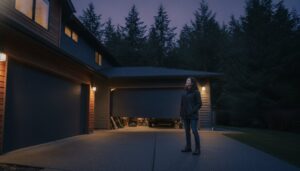
Imagine it is late in the evening and your garage door won’t close despite your repeated attempts with the remote. You are likely standing in your driveway right now, feeling a mix of frustration and concern about leaving your property exposed overnight. Much like the stress of being stranded on the road and needing Dependable Towing & Recovery Services, a garage door failure is an urgent mechanical emergency that requires a professional touch. It’s a stressful situation that triggers immediate worries about home security and the safety of your family. You aren’t alone in this experience, as mechanical systems often choose the most inconvenient moments to malfunction.
This 2026 troubleshooting guide is designed to lower your stress by providing clear, organized solutions. We promise to help you identify the root cause of the issue and show you how to safely secure your home today. Whether you are dealing with misaligned sensors or a door that has slipped off its tracks, we provide the technical clarity you need to move forward with confidence.
We will preview the most frequent culprits behind a stuck door, from simple obstructions to complex spring failures. You will learn how to perform a basic safety inspection to decide if the fix is a quick DIY task or a professional job. By the end of this guide, you will have a dependable plan to get your door moving again safely and efficiently.
Key Takeaways
- Identify immediate safety protocols to secure your property and protect your family when your garage door won’t close unexpectedly.
- Troubleshoot common mechanical failures like misaligned photo-eye sensors and learn to identify the physical signs of a broken torsion spring.
- Learn how to adjust motor travel limits and force settings to prevent the door from reversing before it reaches the ground.
- Distinguish between simple maintenance tasks you can handle yourself and high-risk repairs that require professional expertise for cables and springs.
- Discover professional solutions for Washington residents, including 24/7 emergency response for urgent security risks in Seattle, Spokane, and Everett.
Immediate Steps to Take When Your Garage Door Won’t Close
Discovering that your garage door won’t close is a genuine security emergency, especially late at night. Before you attempt any mechanical troubleshooting, prioritize safety. Clear the entire area and keep children and pets far away from the opening. A standard residential garage door can weigh several hundred pounds. If a component fails while you are standing underneath it, the results can be catastrophic. Approach the situation with caution and avoid placing your hands near the tracks or hinges while the system is under tension.
Conduct a quick visual sweep of the threshold. Check the metal tracks for debris like small rocks, gardening tools, or stray toys. Even a minor obstruction can trigger the safety sensors of your electric garage door opener. These systems are designed to reverse the door’s direction if they detect even slight resistance. Removing a simple physical block often solves the issue immediately without requiring tools. If the path is clear but the door still refuses to budge, the problem likely lies within the mechanical or electrical components.
Using the Manual Release Safely
The red emergency release cord is a vital safety feature found on the motor carriage. It allows you to disconnect the door from the automated system for manual operation. You should generally only pull this cord when the door is in the fully closed position. If you pull it while the door is open and a spring is broken, the door will crash down instantly. This poses a severe risk to anyone nearby. Once you have successfully disconnected the door, try to lift it manually. A healthy, well-balanced door should stay in place or feel relatively light. If the door feels like dead weight, don’t attempt to force it.
Temporary Security Measures
If you cannot get the motor to respond, you must secure your property manually to prevent unauthorized entry. Most sectional doors include a sliding side lock bar on the interior. Locate this bar and slide it firmly into the slot on the vertical track. This creates a physical deadbolt that prevents the door from being forced open from the exterior. If your door doesn’t have a side lock, you can use a heavy-duty C-clamp as a temporary solution. Secure the clamp to the track directly above one of the rollers. This effectively pins the door to the ground. Confirm the door is fully seated against the floor to block out pests and maintain your home’s temperature until a professional arrives.
Common Mechanical and Sensor Failures
When your garage door won’t close, the internal safety logic of the opener is often the primary cause. Since 1993, federal safety requirements for garage door openers have mandated secondary entrapment protection, usually in the form of photo-eye sensors. These sensors are the most frequent reason a door reverses immediately after starting its downward cycle. If the invisible infrared beam is interrupted, the motor assumes an object or person is in the path and retreats to the open position for safety.
Troubleshooting the Photo-Eye Sensors
In Washington, environmental factors frequently interfere with these sensitive electronic components. High humidity in Everett or seasonal dust in Spokane can create a thick film on the sensor lenses. Simply wiping them with a soft, lint-free cloth often restores function. Check the indicator lights on both units near the floor. One is typically green and the other amber. Both must be solid. If they are flickering or dark, the sensors are misaligned. A unique challenge for Spokane residents is the intense, low-angle sunset. Bright sunlight can occasionally “blind” the receiving sensor, tricking the system into thinking the beam is broken.
Identifying Hardware Damage
Identifying why a garage door won’t close often requires a close look at the heavy lifting hardware. If your sensors are glowing steadily but the door still refuses to move, look upward at the torsion spring. This heavy metal coil sits on a bar above the door header. A broken spring is easy to spot because it will have a visible gap of two to three inches where the steel has snapped. Without the tension from this spring, the opener’s safety system may detect excessive weight and stop the door to prevent motor burnout.
Examine the lift cables on either side of the door. If one side looks loose or the door hangs at a slight angle, you likely have a “cable off-drum” issue. This often happens if the door hits an object while opening, causing the cable to lose tension and jump its track. Grinding or scraping noises during operation suggest that the tracks are bent or the rollers are seized. For complex mechanical issues like these, scheduling a professional safety inspection ensures that all high-tension components are handled correctly. Small pebbles or dried mud in the bottom of the tracks can also trigger a reversal. Clear these areas with a stiff brush to ensure a smooth, unobstructed path for the rollers.
Opener Settings and Travel Limit Adjustments
Sometimes the hardware is perfectly intact, but the electronic “brain” of your system has lost its way. If your garage door won’t close and instead reverses immediately upon touching the floor, the travel limits likely need recalibration. Travel limits are the programmed settings that tell the motor exactly how far the carriage must move before the door is considered fully shut. If these settings are even a fraction of an inch too deep, the door will strike the floor, detect resistance, and trigger a safety reversal because it thinks it has hit an obstruction.
Force settings operate on a similar principle of resistance detection. These settings determine how much power the motor uses to move the door. Over time, as rollers age or tracks become slightly sticky, the motor may require more force to complete a cycle. If the current force setting is too low, the opener might interpret normal friction as a safety hazard and stop mid-cycle. While a logic board glitch can occasionally cause these settings to drift, a “hard reset” by unplugging the unit for sixty seconds often clears temporary memory errors.
How to Reset Garage Door Travel Limits
Modern units from manufacturers like LiftMaster and Genie typically feature “Limit” or “Learn” buttons on the back or side of the motor housing. To begin the adjustment, you generally hold the limit button until the indicator light flashes, then use the up and down arrows to move the door to the desired closed position. Once the weather stripping is flush against the floor without being crushed, you lock in the setting. You must perform a safety reversal test after every adjustment. Place a two by four piece of wood on the floor. If the door doesn’t reverse immediately upon hitting the wood, the limits are still set too high and require further refinement.
Signal and Remote Interference
If the wall switch works but the remote fails, you are likely dealing with signal interference rather than a mechanical breakdown. Start with the basics by checking battery levels in your remotes and wireless keypads. A weak battery can send a fragmented signal that the opener cannot process. Interestingly, certain LED light bulbs installed inside the opener itself can emit radio frequency interference that “jams” the remote’s signal. If your garage door won’t close only when the opener lights are on, try switching to bulbs specifically labeled as “garage door compatible.” In certain areas of Washington near military bases or radio towers, external frequency crowding can also cause intermittent remote failure, which may require an external receiver upgrade.
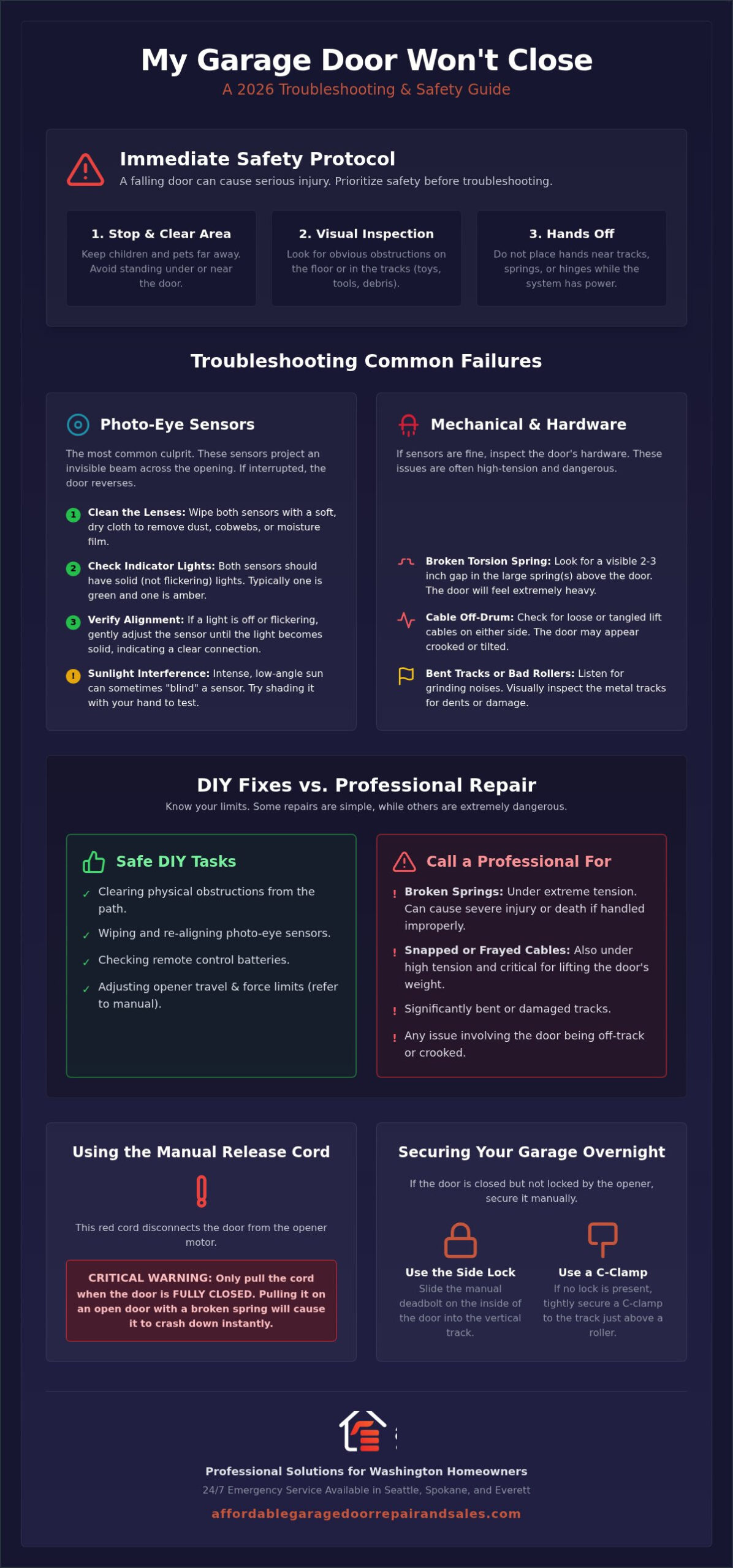
DIY Quick Fixes vs. Professional Repair: A Safety Framework
Understanding the boundary between a simple fix and a dangerous mechanical failure is essential for every homeowner. When your garage door won’t close, the urge to troubleshoot immediately is natural, but you must distinguish between accessible maintenance and high-tension repairs. We follow the ‘Clean and Clear’ rule: if the fix involves removing debris, cleaning a sensor, or basic lubrication, it’s a safe DIY task. However, if the issue involves the counterweight system, it falls strictly into the professional-only category.
The high-tension danger zone includes the torsion springs, extension springs, and lift cables. These components store an immense amount of energy to offset the door’s weight. If a spring snaps or a cable is released incorrectly, the force can cause severe injury or significant property damage. Specialized tools, such as professional winding bars, are required for these tasks. Standard home tools are insufficient and unsafe for this level of mechanical work. If you are in a situation where the door is stuck open at night and poses a security risk, it is better to seek Emergency Garage Door Repair in Everett than to risk a DIY accident.
Safe DIY Maintenance Tasks
Homeowners can safely perform routine maintenance to keep the system running smoothly and prevent future failures. Start by lubricating the metal rollers and hinges with a high-quality silicone-based spray. Avoid using standard degreasers or heavy grease, as these can attract dust and eventually gum up the mechanism. You should also check for loose nuts and bolts on the hinges and track brackets. A simple wrench can tighten these components to prevent excessive vibration and noise. Finally, use a damp cloth to wipe down the internal tracks. Removing old grease and grime buildup ensures the rollers move without resistance, which often prevents a situation where a garage door won’t close due to perceived obstructions.
When to Call a Professional Immediately
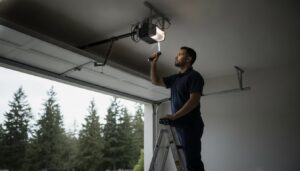
Certain symptoms indicate a failure that goes beyond basic maintenance. If you notice a visible gap in your torsion spring or a frayed lift cable, do not attempt to operate the door manually or with the motor. These parts are under extreme stress and require expert handling. Similarly, if the door is hanging crookedly or has completely slipped off its tracks, it is no longer structurally stable and could fall. A motor that makes a loud humming sound but fails to move the door often points to a stripped internal gear or a failed capacitor. In these cases, you should contact a technician for a safety inspection and repair to restore your home’s security safely.
Professional Solutions for Washington Homeowners
When your garage door won’t close, the situation often requires more than a temporary fix. It is a direct threat to your home’s security and your family’s peace of mind. Affordable Garage Door Repair & Sales LLC treats these malfunctions as urgent priorities. We provide 24/7 emergency repair availability across the state, ensuring that residents from Seattle to Spokane have access to expert help when they need it most. Our team focuses on delivering stable, long-term results rather than just patching the immediate problem.
Our service area is extensive, covering major hubs like Everett and Yakima. We understand that a door stuck open in the middle of the night creates significant anxiety. By prioritizing fast response times for security-related issues, we help you regain control of your property quickly and safely. Our technicians arrive equipped to handle a wide range of mechanical and electrical failures on the spot.
What to Expect During a Professional Repair Visit
A professional consultation follows a methodical, comprehensive process designed to give you confidence in the repair. We don’t just look at the obvious symptom. We perform a detailed 25-point safety inspection to evaluate the health of every component, from the torsion springs to the drums and rollers. This proactive approach helps identify wear and tear that could lead to future emergencies.
- Free On-Site Estimates: We provide transparent pricing and clear explanations before any work begins.
- Same-Day Solutions: Our trucks are stocked with high-quality parts for common spring repairs and opener replacements.
- Technical Competence: Our experts handle high-tension systems that are too dangerous for DIY attempts.
Why Local Expertise Matters in Washington
Washington’s varied geography presents unique challenges for mechanical systems. In coastal cities like Seattle and Tacoma, the salt-heavy air can accelerate corrosion on metal tracks and hardware. We select durable, weather-resistant materials to ensure your door stands up to the damp Pacific Northwest climate. For our clients in Eastern Washington, we focus on preparing systems for extreme temperature swings. A door in Spokane must be able to operate smoothly in both blistering summer heat and freezing winter snow.
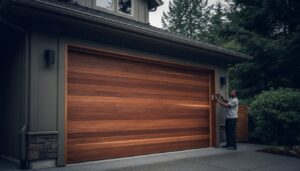
If your current system is outdated or structurally compromised, a repair might not be the most cost-effective path forward. We can assist you with a new garage door installation that improves your home’s insulation and resilience. We also serve as a versatile partner for the business community, providing specialized commercial garage door repair for warehouses and industrial facilities. Whether you are a homeowner or a property manager, we are committed to providing the precision and value you expect from a local industry leader.
Secure Your Home with Expert Garage Door Solutions
Managing a situation where your garage door won’t close requires a balance of immediate action and technical caution. You now understand how to perform basic safety checks, such as cleaning photo-eye sensors and clearing track obstructions. You also recognize the critical difference between simple maintenance and high-risk repairs involving torsion springs or cables. Prioritizing your home’s security doesn’t have to be a source of stress when you have a systematic plan to follow.
If your troubleshooting efforts haven’t restored function, it’s time to partner with a seasoned specialist. Affordable Garage Door Repair & Sales LLC provides stability and peace of mind through professional service. We offer free on-site estimates and 24/7 emergency service to address urgent security risks immediately. From Everett to Spokane, we serve the entire Washington community with precision and value. Don’t leave your property exposed overnight. Get 24/7 Emergency Garage Door Repair Now and let our experts handle the heavy lifting. You can rest easy knowing your garage is secure and your door is operating at its best.
Frequently Asked Questions
Why does my garage door start to close and then go back up?
This reversal usually happens because the safety sensors detect an obstruction or the motor senses excessive resistance. If the path is clear, the opener might think the door is too heavy due to a broken spring or worn rollers. In Washington cities like Seattle, moisture buildup on the tracks can also increase friction. This triggers the safety reversal system to prevent damage to the motor or the door panels.
Can I manually close a garage door with a broken spring?
You should never attempt to manually close or move a door with a broken spring because the counterweight system is no longer supporting the door’s weight. A standard sectional door becomes a heavy, uncontrolled object that can fall and cause severe injury. If your garage door won’t close due to a snapped torsion spring, it’s a critical security risk that requires professional repair to restore the tension safely.
What do the flashing lights on my garage door opener mean?
Flashing lights on the motor unit or the wall button are diagnostic codes designed to help you identify specific system errors. Most often, ten flashes indicate a problem with the photo-eye sensors, such as misalignment or a blocked beam. Different manufacturers use unique patterns to signal issues with the logic board or travel limits. Checking your specific manual or consulting a professional in Everett or Yakima can clarify these signals quickly.
How much does it cost to fix a garage door that won’t close in Washington?
The cost of repair depends on the specific cause of the failure, such as whether you need a simple sensor alignment or a full opener replacement. Factors like the type of springs used and the extent of the hardware damage also influence the final investment. Affordable Garage Door Repair & Sales LLC provides free on-site estimates across Washington to ensure you receive an accurate and transparent quote based on your specific needs.
Is there a sensor bypass for garage doors?
There is no permanent bypass for safety sensors because they are a federal safety requirement, but most openers allow a temporary override. You can usually force the door to close by holding down the wall button until the door reaches the floor. This should only be used in emergencies to secure your home in places like Spokane or Pasco. You must address the underlying sensor issue immediately to maintain safe operation.
Why won’t my garage door close with the remote but will with the wall button?
This symptom points to a signal issue rather than a mechanical failure of the door itself. Common causes include a dead remote battery, radio frequency interference from nearby electronics, or a faulty receiver on the logic board. If you are near a military installation in Auburn or Tacoma, external signals might disrupt the frequency. Replacing the batteries or switching to garage-compatible LED bulbs often resolves this specific communication problem.
Can cold weather prevent my garage door from closing?
Extreme cold can cause the metal tracks to contract and the lubrication to thicken, which increases friction during operation. In Eastern Washington cities like Wenatchee or Spokane, freezing temperatures often make the motor work harder, potentially triggering a safety reversal. Applying a silicone-based lubricant helps the rollers move smoothly through the tracks. If the door still struggles, your opener’s force settings might need a professional adjustment for the winter season.
How often should I have my garage door safety sensors checked?
You should perform a basic safety sensor test at least once a month to ensure the reversal system is functioning correctly. Simply wave an object in front of the sensors while the door is closing to confirm it retreats. A professional safety inspection should be scheduled annually. This comprehensive check-up by a technician in Puyallup or Ellensburg ensures that all hardware components, including cables and springs, remain in peak condition for long-term durability.