Imagine you’re heading out for the day when you press the garage remote, only to hear a loud snap followed by your door hanging at a dangerous, crooked angle. It’s a stressful moment that leaves many Washington homeowners wondering if their system is still safe to touch. Understanding the early signs of a broken garage door cable can mean the difference between a simple maintenance visit and a dangerous emergency where a door weighing over 200 pounds is stuck half open. These steel lifelines are under immense tension. When they begin to fray, they put your family and your property at immediate risk.
We understand the frustration of not knowing whether you’re facing a minor glitch or a major mechanical failure. It’s common to feel confused about whether the issue lies with your torsion springs or the cables themselves. This guide will help you clear up that confusion by providing a professional breakdown of exactly what to look for. We will explore the seven most critical warning signs of wear, explain why these components fail, and show you how to restore safety to your home before a total cable snap occurs.
Key Takeaways
- Learn to spot the early signs of a broken garage door cable, such as visible fraying or rust, before they lead to a complete system failure.
- Understand why a “crooked door” often indicates a snapped cable and how this misalignment puts immediate stress on your tracks and rollers.
- Discover how Washington’s humidity and coastal air accelerate oxidation in galvanized steel, shortening the lifespan of your door’s hardware.
- Identify the extreme safety risks associated with high-tension springs and why professional tools are required for a secure cable replacement.
- Gain peace of mind by knowing when to utilize 24/7 emergency services to secure a heavy door that is stuck in a dangerous or half-open position.
Understanding the Role of Garage Door Cables in Your System
Garage door cables serve as the heavy-duty lifelines of your entire garage door system. These components are constructed from multiple strands of galvanized steel wire twisted together to create a high-strength cable capable of managing immense weight. While the springs provide the necessary tension to move the door, the cables do the actual work of transferring that energy. Without functional cables, the door becomes a dead weight. In many homes, these doors range from 100 to over 400 pounds. Homeowners who ignore the subtle signs of a broken garage door cable often face more expensive repairs or dangerous accidents later.
Identifying the signs of a broken garage door cable is easier when you recognize that these parts never work in isolation. They are part of a complex counterbalance system. They are constantly under stress, whether the door is open, closed, or in motion. If a cable fails, the balance is lost immediately. This can lead to the door falling rapidly or becoming jammed at a sharp angle in the tracks, which stresses the rollers and the opener motor.
Torsion Spring Lift Cables
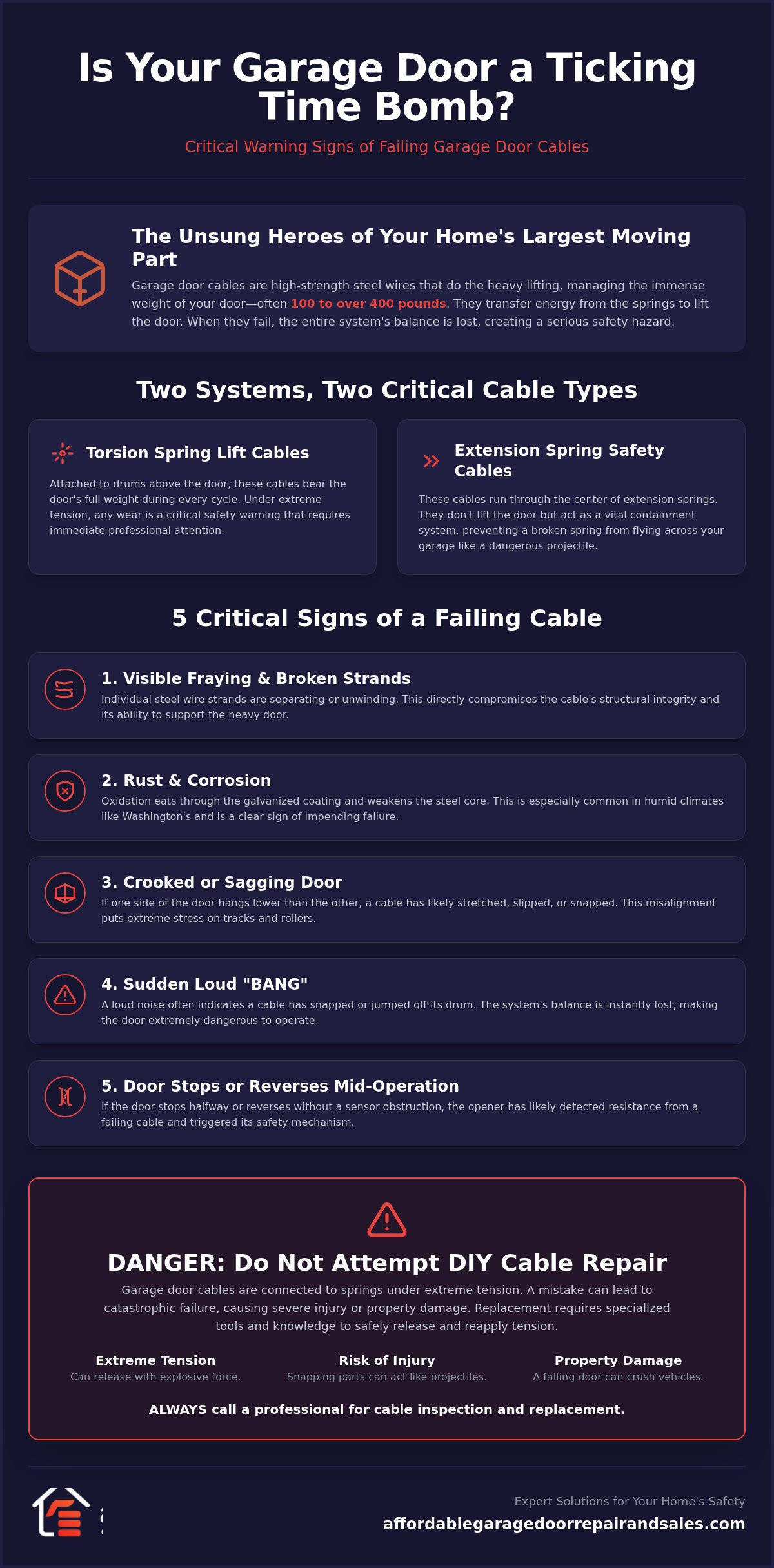
In a torsion spring setup, the cables are attached to the bottom corners of the door and run up to drums located on the metal shaft above the door opening. As the torsion spring unwinds to open the door, the drums rotate and wind the cables around their precisely machined grooves. This physics-driven “pull” allows the door to rise evenly and smoothly. Because these cables bear the full weight of the door during every cycle, they are under the most extreme tension in the entire system. Any fraying or kinking in this area is a critical safety warning that requires professional attention.
Extension Spring Safety Cables
Extension spring systems use a different arrangement. The lift cables handle the movement, while safety cables serve a completely different purpose. These safety lines run through the center of the extension springs and are anchored to the door track or wall. They don’t help lift the door. Instead, they act as a containment system. If an extension spring snaps under pressure, the safety cable keeps the broken metal from flying across the garage like a projectile. You can identify if your system is missing these by looking through the center of your springs. If you see empty space instead of a steel wire, your home is missing a vital secondary safety feature that protects your family and vehicles.
5 Critical Signs of a Broken or Failing Garage Door Cable
Spotting the signs of a broken garage door cable early can prevent a minor maintenance task from turning into a property-damaging crisis. Because these cables are under constant tension, they rarely fail without providing some form of warning. You just need to know where to look and what to listen for before the system collapses. Identifying the signs of a broken garage door cable requires a mix of visual checks and listening for subtle operational changes during the door’s cycle.
Visual Indicators of Imminent Failure
Examining your cables during a routine monthly inspection is the most effective way to catch problems before they start. Fraying is the separation of individual wire strands that compromises structural integrity. When these strands begin to unwind, the cable loses its capacity to support the heavy door panels safely. You should also check for corrosion. Rust often eats through the galvanized coating, weakening the steel core long before the cable actually snaps. Finally, look for kinking. A bent or twisted cable creates a permanent weak point that is highly prone to snapping under the next cycle of extreme tension.
Operational Red Flags
If you notice the “Crooked Door” syndrome, where one side of the door sits lower than the other in the tracks, you likely have a cable that has stretched or slipped. This uneven alignment causes the door to bind, which puts unnecessary stress on the rollers. You might hear a sudden, loud “bang” sound during operation. This often indicates that a single strand has snapped or the cable has jumped off the drum entirely. When this happens, the balance of the door is lost, making it dangerous to operate.
Another common red flag is when the door stops halfway or reverses without any visible sensor obstruction. This occurs because the opener detects the resistance of a failing cable and triggers a safety reversal to prevent damage. If you suspect your system is failing, you should schedule a garage door safety inspection to identify the exact cause. Ignoring these issues can lead to The Dangers of DIY Cable Repair, as failing components can release energy unexpectedly and cause serious injury.
Watch for slack or loose cables hanging near the side tracks. A cable that has “jumped” its drum is no longer providing support, leaving the other side to handle the entire load alone. This causes the opener to strain, making the motor sound significantly louder or more labored than usual. If one side of the door drags or moves slower during the opening process, it’s a clear indicator that your cables are no longer synchronized and require professional calibration.
Common Causes of Cable Failure in Washington Homes
While the signs of a broken garage door cable are often obvious once they appear, understanding what triggers these failures can help you extend the life of your door. In a high-use household, a standard cable is designed to last between 7 and 12 years, which is roughly the same lifespan as the torsion springs. However, several factors unique to the Pacific Northwest can shorten this window significantly. From environmental exposure to mechanical misalignment, your cables are fighting a constant battle against friction and oxidation.
Environmental Stressors in the Pacific Northwest
Living in cities like Seattle and Everett presents a specific challenge often called the “Washington Effect.” High humidity levels and persistent rain lead to “hidden” rust. This oxidation occurs deep inside the twisted wire bundles where lubrication often fails to reach. Over time, this internal corrosion makes the steel brittle and prone to snapping. Temperature fluctuations also play a role. When the air shifts from a damp 40 degrees to a freezing winter morning, the tension on the cables changes, which can lead to microscopic cracks in the galvanized coating. Coastal homes face even greater risks. Salt air is highly corrosive, requiring these residents to perform more frequent visual checks to ensure their hardware remains sound.
It’s vital to know How to Inspect Safely when checking for these environmental issues. DASMA recommends looking for any white, powdery oxidation or dark rust spots along the entire length of the cable. If you catch these signs of a broken garage door cable early, you can often avoid a complete system collapse that might leave your car trapped inside your garage.
Mechanical Mismanagement
Mechanical issues often stem from improper track alignment. If your tracks are even slightly crooked, the cable will rub against the metal drum or the track edge during every cycle. This friction essentially “saws” through the steel strands, leading to rapid fraying. Additionally, using the wrong cable size is a common mistake in homes with heavy custom wood or glass doors. These heavy panels require thicker, reinforced cables to handle the increased load. If the cables are undersized, they will stretch and eventually fail under the weight.
The health of your garage door opener also impacts cable longevity. A failing motor might jerk or pull unevenly, putting sudden, sharp stress on one side of the system. Finally, accumulated debris like dirt or hardened grease in the tracks can cause a cable to “jump” its drum. Once the cable is off the drum, it loses its tension and can become tangled, making the door impossible to move safely without professional intervention.
The Dangers of DIY Cable Repair and How to Inspect Safely
Releasing a garage door cable isn’t like changing a lightbulb or tightening a loose hinge. It’s a high-stakes mechanical procedure that involves extreme tension. The “Spring-Cable Connection” means that the cables are the primary components holding back the stored energy of your torsion or extension springs. If you attempt to loosen or remove a cable without the proper training, you can trigger a violent release of force. This often results in high-velocity metal parts flying through the garage or a heavy door crashing down without warning. Residential doors typically weigh between 75 and 200 pounds, which is more than enough weight to cause serious, life-altering injuries or significant property damage.
While you should never attempt a repair yourself, you can safely identify the signs of a broken garage door cable by following the “Look, Don’t Touch” rule. This approach allows you to assess the health of your system without putting yourself in the path of danger. Most major issues are visible to the naked eye if you know where to focus your attention during a routine walk-through. If you spot something concerning, it’s best to leave the tools in the chest and call for a specialist who has the necessary winding bars and safety equipment to handle the job.
Your 5-Minute Visual Inspection Checklist
- Inspect the drums: Look at the top corners of the door frame. The cables should be wound neatly around these metal spools. If you see “bird-nesting” or tangled strands, the cable has likely slipped or stretched.
- Check the bottom brackets: This is where the cable attaches to the door. Look for heavy rust or structural corrosion. In Washington’s damp climate, this is often where the first signs of a broken garage door cable appear.
- Verify tension: With the door fully closed, the cables should be taut. If one side looks slack or is hanging loose, the system is no longer balanced and requires immediate attention.
Why Professional Expertise is Mandatory
Precision is the hallmark of a safe and functional repair. A professional technician uses specialized winding bars to manage spring tension and locking pliers to secure the door’s weight before any hardware is removed. This ensures the door remains safely on its tracks throughout the replacement process. We also follow the industry standard of replacing cables in matched sets. Even if only one side has failed, the other has likely suffered identical wear. Replacing both ensures balanced operation and prevents a second service call just a few weeks later.
If your visual check reveals fraying, rust, or slack, don’t wait for the cable to snap completely. You can request a professional safety inspection and cable replacement to restore the security and functionality of your garage door today.
Expert Garage Door Cable Replacement and Repair Solutions
Affordable Garage Door Repair & Sales LLC approaches every service call with a focus on stability and long-term functionality. When you identify the signs of a broken garage door cable, you need a partner who understands the local wear and tear specific to Washington’s climate. We provide 24/7 emergency services across the state, including Everett, Seattle, and Spokane, ensuring that a door stuck in a dangerous position doesn’t compromise your home’s security for long. Our technicians arrive with the expertise needed to handle both torsion and extension spring systems, prioritizing a transparent process that lowers your stress.
Our Professional Repair Process
A systematic approach is essential for a safe resolution. We follow a three-step protocol to ensure the repair is durable and precise.
- Step 1: Neutralizing Tension. Our first priority is safety. We secure the door’s weight and use professional winding bars to neutralize spring tension before touching the cables.
- Step 2: Material Selection. We don’t use generic wires. We select high-grade galvanized aircraft cables that are specifically matched to your door’s weight and size requirements.
- Step 3: Precision Balancing. Once the new cables are installed, we perform a balance test. This ensures the door rises evenly and operates quietly, which reduces the load on your opener motor.
Preventative Maintenance for Longevity
Fixing a snapped cable is often just the beginning of restoring your system. We believe in proactive care to prevent the signs of a broken garage door cable from returning. This includes performing a full system tune-up with every repair. We recommend annual safety inspections for both residential and commercial properties to catch fraying or rust before it leads to a failure. During these visits, we provide essential lubrication for pulleys and drums. This significantly reduces the friction that causes cables to wear out prematurely.
In some cases, chronic hardware failure suggests that the door itself has reached the end of its functional life. If your cables, springs, and tracks require constant attention, it might be more cost-effective to consider a new door installation. Modern doors often feature improved galvanized components and advanced safety technology that can withstand the 7 to 12 year lifespan expected of high-quality systems. Whether you need a quick fix or a complete upgrade, our goal is to provide a reliable, high-standard solution that keeps your garage functional and safe.
Secure Your Home with Professional Cable Maintenance
Your garage door cables are essential components that ensure the safe and smooth operation of your home’s heaviest moving part. By staying vigilant and identifying the signs of a broken garage door cable early, you can avoid the stress of a door stuck half-open or the danger of a sudden cable snap. These systems are under extreme tension and require specialized tools for safe handling. Whether you’ve noticed minor fraying or a crooked door, taking action now protects your family and your property from unnecessary risk.
Affordable Garage Door Repair & Sales LLC is your dependable local partner for all garage door needs. We provide 24/7 emergency service in Seattle, Everett, and Spokane to handle urgent repairs when they matter most. Our highly trained local technicians are experts in both residential and commercial repairs, ensuring every job is completed with precision and care. You don’t have to manage these mechanical risks alone. Get a Free Estimate for Garage Door Cable Repair today and restore peace of mind to your daily routine. We are ready to help you keep your home safe and your door functioning perfectly.
Frequently Asked Questions
Can I still open my garage door if one cable is broken?
No, you should not attempt to operate the door if a cable is broken. When one cable fails, the entire weight of the door shifts to the remaining cable and spring, which creates a dangerous imbalance. This can cause the door to bind in the tracks or fall suddenly. Operating the door in this state can also burn out your opener motor or damage the rollers beyond repair.
How much does it typically cost to replace garage door cables?
The total cost for a professional cable replacement varies based on the type of spring system and the weight of your door. Service calls typically include the cost of high-grade galvanized cables, labor for installation, and a full system balance test. While individual parts are affordable, the primary value lies in the technical expertise required to safely manage high-tension springs. We recommend requesting a free estimate for your specific setup.
How long do garage door cables usually last before they need replacement?
Most residential garage door cables have a functional lifespan of 7 to 12 years. This timeline often mirrors the life expectancy of your torsion springs, as both components work together during every cycle. In Washington cities like Seattle and Everett, high humidity can lead to internal corrosion that shortens this window. Regular safety inspections help you identify the signs of a broken garage door cable before a total failure occurs.
What is the difference between a garage door cable and a garage door spring?
Springs provide the lifting force, while cables transfer that force to the door panels. Think of the spring as the engine and the cable as the transmission. The spring stores mechanical energy under tension, and the cable uses that energy to pull the door upward. Both components are critical for a functional counterbalance system. If either part fails, the door becomes too heavy for the opener or a person to lift.
Why did my garage door cable come off the drum?
Cables usually jump off the drum due to a lack of tension or a physical obstruction in the tracks. If the door hits an object while closing, the cables can go slack, causing them to unspool from the drum. Other causes include broken springs, worn-out rollers, or improper track alignment. Once a cable is off the drum, the door will likely hang at a crooked angle and require professional recalibration to restore safety.
Is a frayed garage door cable an emergency?
Yes, a frayed cable is a high-priority safety concern that requires immediate attention. Fraying indicates that individual steel strands have already snapped, which significantly reduces the cable’s load-bearing capacity. Because these cables are under extreme tension, a frayed section can give way at any moment. Identifying these signs of a broken garage door cable early prevents a dangerous situation where the door could fall on a vehicle or a family member.
Do I need to replace both cables if only one is broken?
Yes, it’s standard industry practice to replace garage door cables in pairs. Even if only one cable has snapped, the other has been subjected to the same number of cycles and environmental stress. Replacing both at the same time ensures that your door remains perfectly balanced. This prevents the second older cable from failing shortly after the repair, providing better long-term value and ensuring the continued reliability of your entire door system.
What should I do immediately after a garage door cable snaps?
Stop using the door immediately and keep everyone away from the garage opening. Don’t attempt to pull the emergency release cord or force the door closed, as this can cause the door to crash down. A snapped cable leaves the door in an unstable state where it could shift or fall unexpectedly. Contact a local expert for emergency 24/7 garage door repair to secure the door and perform a safe, professional replacement.